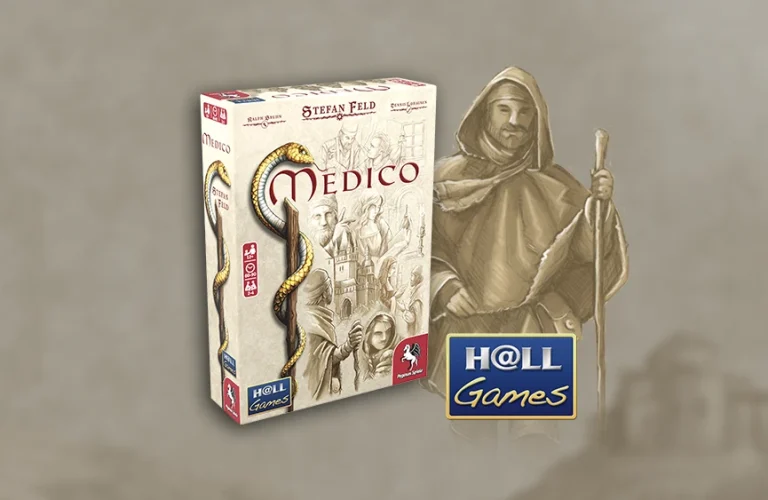



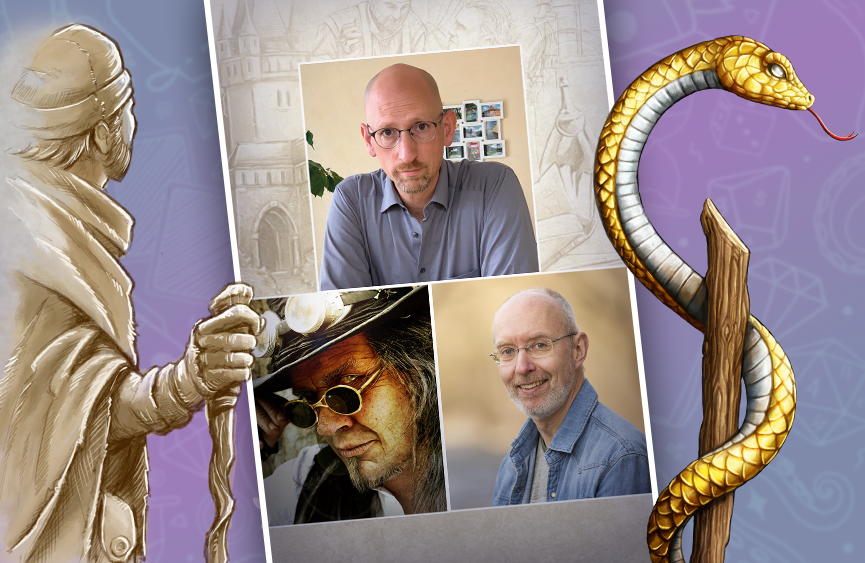
For more than ten years, game designer Stefan Feld, illustrator Dennis Lohausen, and editor Ralph Bruhn — editor and owner of our partner publisher Hall Games — have been developing games together. Their first project was AquaSphere in 2014, followed by The Oracle of Delphi in 2016, Bonfire in 2020, and Medico in 2026.
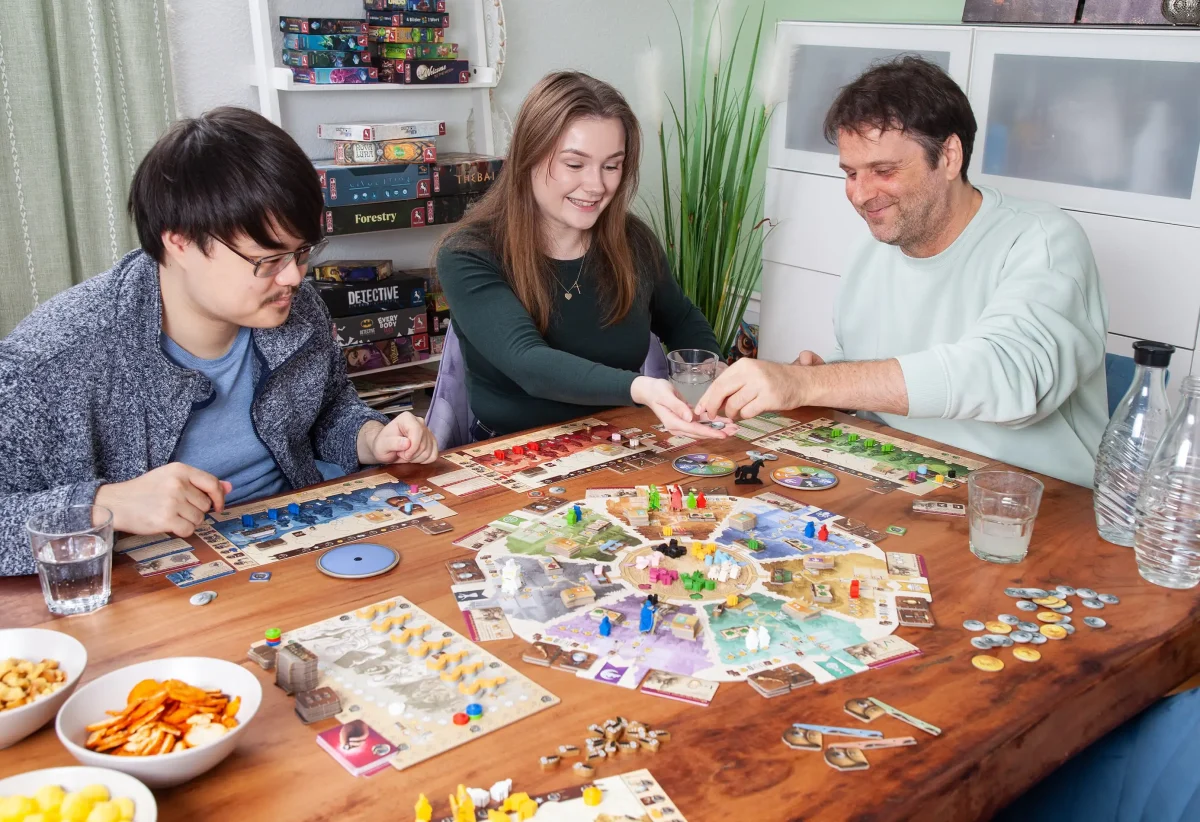
In Medico, we travel across a modular, eight-part game board as traveling barbers. Our goal is to acquire knowledge on our travels so that we can eventually rise to the rank of a learned medicus. And to achieve that, we have plenty of options:
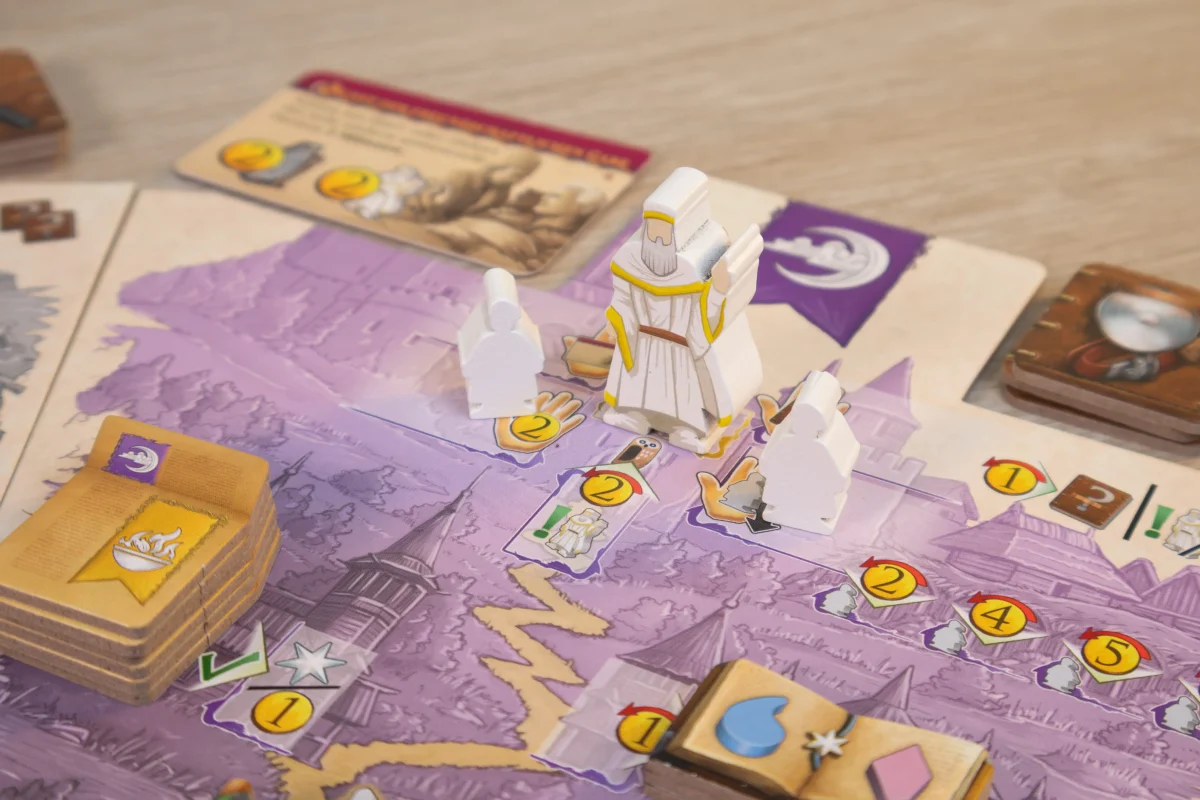
As a barber in the Middle Ages, of course, you can’t do anything without remedies, especially since they can earn us prestige or coins, depending on whether we use them for a recipe or sell them. We also get paid for treating the local population. We need the coins we earn to expand our collection of instruments, study under the medicus, or train apprentices ourselves. We need prestige, which we can also gain by delivering letters, among other things, to come out ahead in prestige duels at the end of each round. Whenever two barbers and/or the medicus end up on the same space, the barber with the higher prestige receives an additional action as a reward. Visiting the neutral medicus is always worthwhile, because he provides knowledge, and as everyone knows, knowledge is power. That’s true in Medico as well, since knowledge unlocks valuable abilities that grant immediate, end-of-game, or permanent advantages. Treating nobles is particularly rewarding, too. Although they don’t pay us any money, we gain their favor instead, represented by one of around 20 different favor cards.
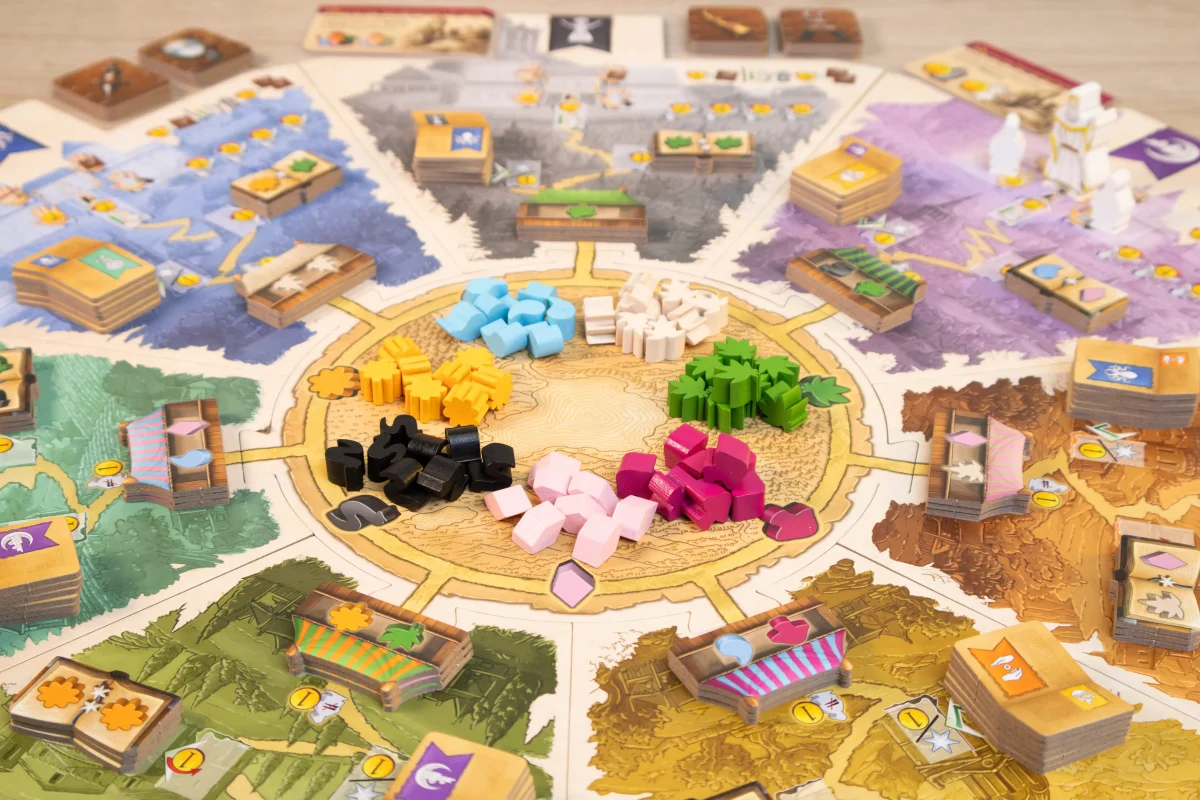
So, over the course of eight rounds, we make our way across the game board set in a medieval setting, trying to convince ourselves, the local population, the nobles, and the medicus that we have what it takes to become the next medicus. Each round, we can decide anew which of the seven locations to visit. However, the choice is made secretly, and where the others go affects our own turn. Although we have to take the shortest route to our chosen location, we can perform a secondary action at every waypoint we pass along the way, in addition to the main action at our destination. So here, the journey really is the destination — or at least an essential part of it.
Speaking of the journey. In the case of Medico, the path to a fully developed game was a bit longer, as a development period of multiple years was unusually long for such an experienced trio. Find out the reasons behind this, what makes the game so special, and what the collaboration between the three of them is like in this interview with Ralph (Bruhn), Dennis (Lohausen), and Stefan (Feld). Enjoy!
What keeps bringing you back to working together?
Ralph: “That’s easy for me to answer: I like them both so much that I stay in touch with them even beyond game development. Since I meet Stefan at various gaming events and get the chance to test his prototypes, I’m always up to date on his latest designs. And when, much later, it’s time to find an illustrator for a game, Dennis is the first person I ask. If he has the time and is interested in the theme, he’s on board!
What’s especially important to me is that we have very similar ideas about what’s good for a game, so one person’s ideas can easily be picked up and developed further by another. It always goes very smoothly.”
Stefan: “I can only agree. For me, the personal relationship is incredibly important when developing games. Over the years, Ralph and I have become friends, and that’s why we keep working together. The process is always constructive, and we manage to design a game that we’re both happy with. And having Dennis as graphic designer and illustrator is always the icing on the cake during development. He contributes even more ideas on how to incorporate aesthetic and thematic refinements into a game that already functions very well mechanically.”
Dennis: “I’m always happy when Ralph approaches me with a new project, because I really enjoy working with him. And if the game also happens to be a new ‘Stefan Feld,’ that’s just perfect! 😉”
You’ve already worked together on a great many projects. Over all those years, have you developed something of a routine, or is every project different?
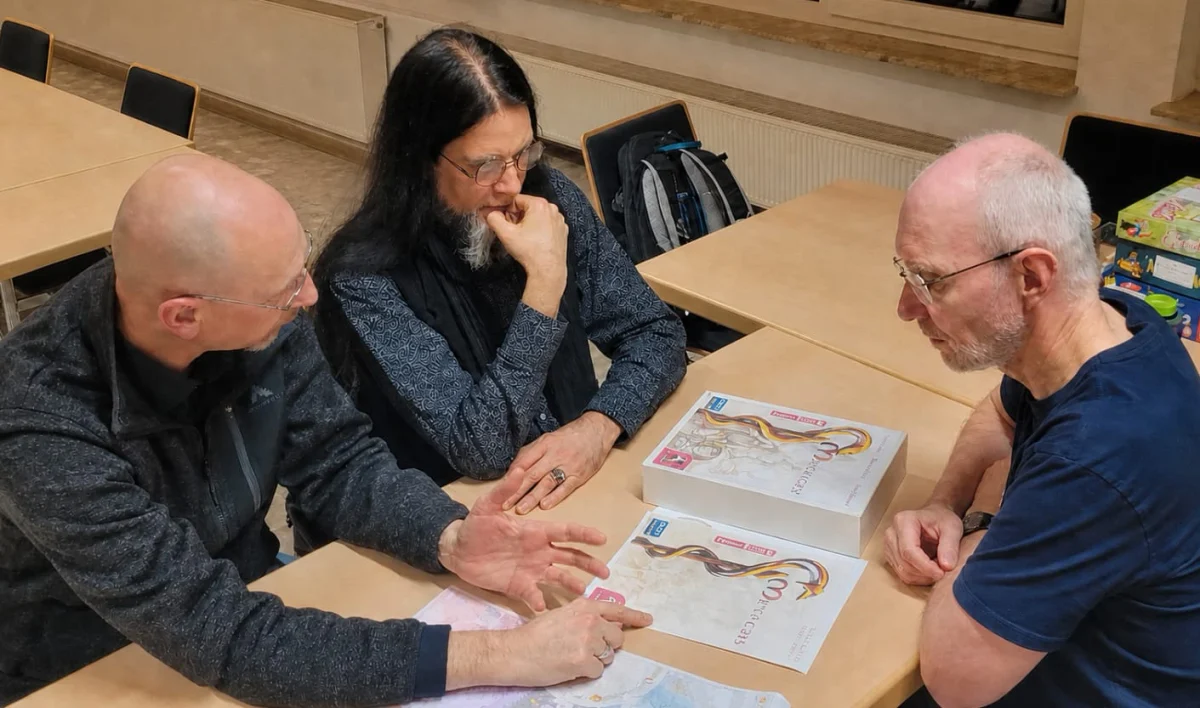
Ralph: “Usually, Stefan and I first continue the development of his prototypes and get the game largely finished before moving on to the graphic design with Dennis. Unfortunately, we’ve only played a game with all three of us together once so far, and that was Bonfire.”
Stefan: “As Ralph said, we meet at gaming conventions about four times a year. These always last several days, and we use that time to work directly on the games as well. Otherwise, we do a lot of testing with our respective groups and regularly discuss things by phone and email. Unfortunately, I usually only see Dennis at the SPIEL in Essen since we also work together for other publishers, not just Hall Games — Civolution says hello … 😉”
Dennis: “When Ralph approaches me with a new project, we play the prototype at least once so I can get a feeling for the mechanics and the atmosphere during play. At that meeting, we also have detailed discussions about how to bring the theme to life and what the components will need to be like. It’s very helpful to have everything laid out on the table and discuss the pros and cons together.
As the project progresses, we regularly talk by email and phone. Since we also have plenty to tell each other about our personal lives, actual work on the game gets mixed in with various off-topic conversations, which generally makes for a lovely working atmosphere. Ideally, the small talk even provides fresh ideas for the game’s design. Personally, I don’t have much contact with Stefan directly during the process; Ralph acts as the go-between.”
What makes Medico special?
Ralph: “I think it’s unusual that everyone takes only a few turns, yet there’s still no sense of downtime. As a result, there are some very rewarding moves that make you feel like you’ve really made a difference.
It’s also a nice mix of planning independently on the one hand and interacting with the other players on the other. I can try to plan one or two turns ahead to optimize my play. But I should keep an eye on everyone else’s plans, too; thinking only about my own play often isn’t enough here.”
Stefan: “For me, it’s two very similar things: first, the structure of the board with its seven areas and the constraints that come from having to take the shortest route. And second, reading the other players. It’s quite important to anticipate what the others will do so you can gain an advantage by choosing your location cleverly.”
What are you particularly proud of in this project, from your respective perspectives?
Ralph: “I’m a little proud that, after a very long development period and several failed versions, we finally managed to publish a game I’m really happy with.”
Stefan: “I agree. And it shows that sometimes you need to put a game aside for a while and then return to it with fresh ideas to give it new momentum. I think what really made the game accessible to everyone was arranging the actions along the route. That enormously improves usability. Before that, keeping track of all the possible actions and secondary actions was overwhelming.”
And were there any particular difficulties during development?
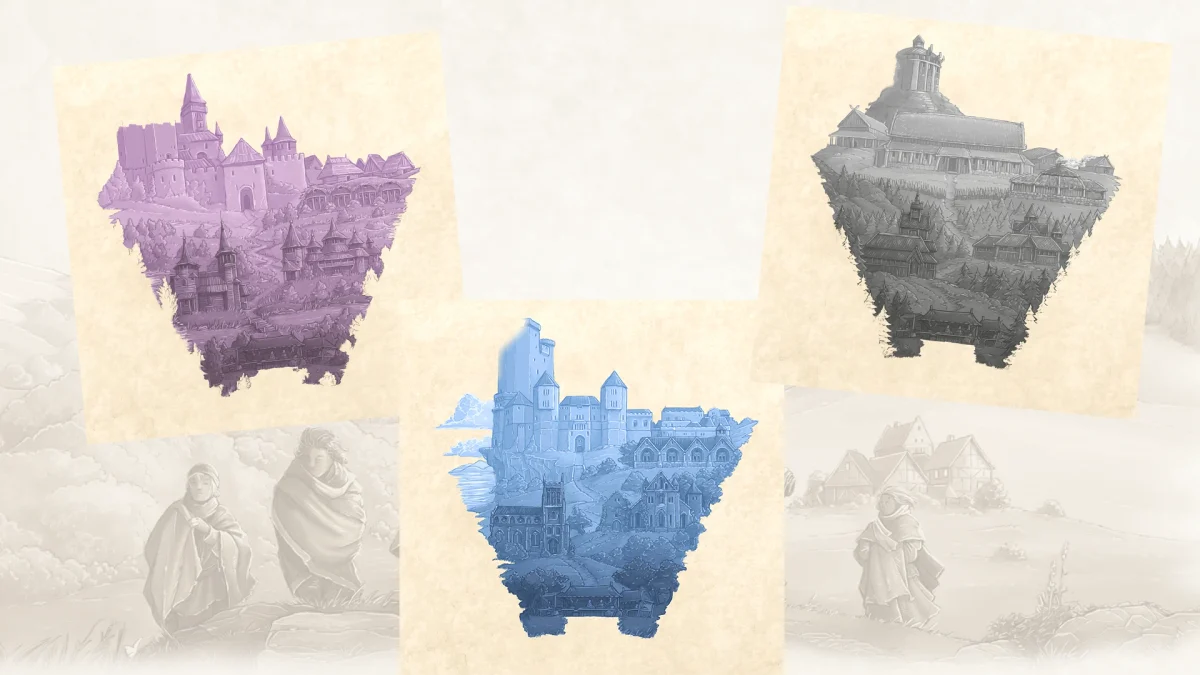
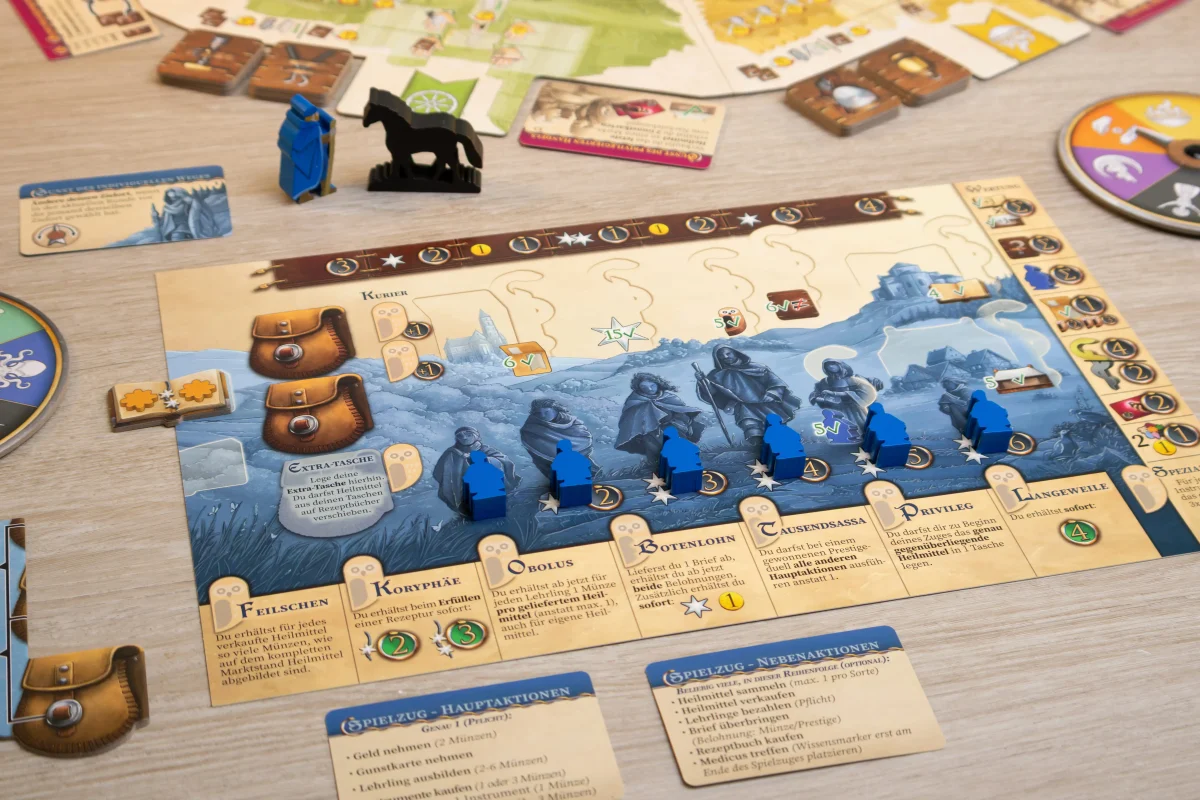
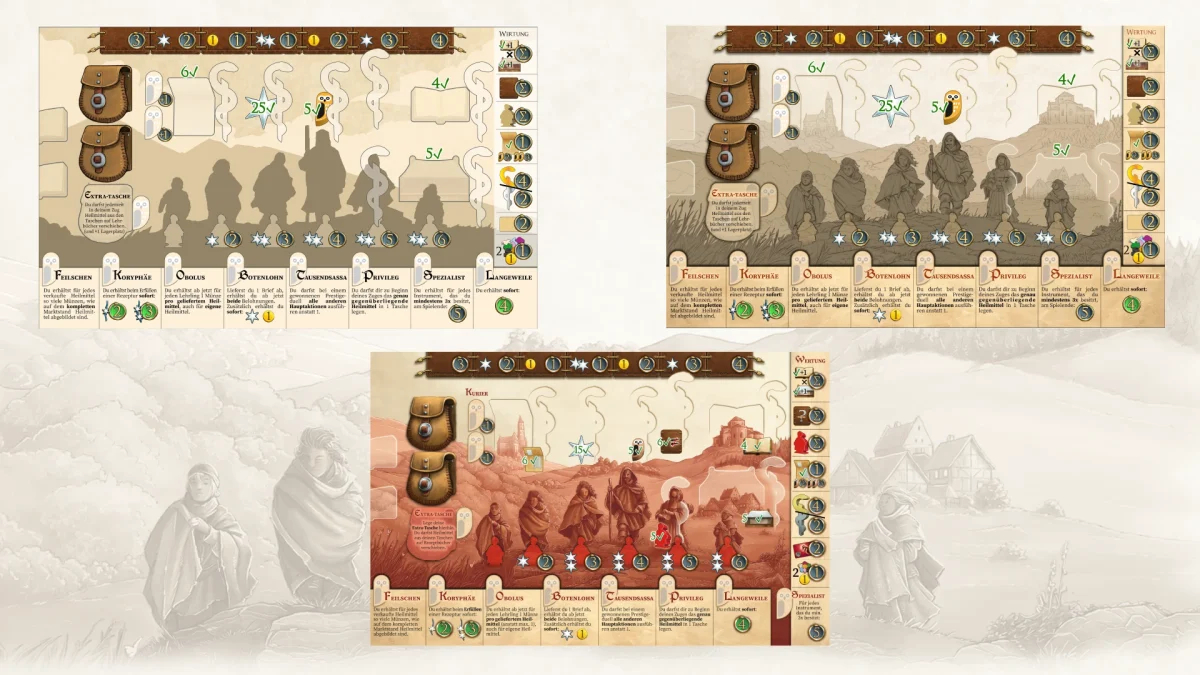
Dennis: „At the beginning, I had an idea of how the seven landscapes could be depicted — namely, for once not from a bird’s-eye view, but as frontal views, each featuring different architectural styles and landscape types, while still ensuring that the game-critical elements were always placed in the same locations and rendered in a similar manner. That wasn’t easy at all, and I’m glad it worked out.”
Ralph: “From the start, I found the game system with its seven locations and the collecting and selling of things very interesting. But for a long time, the problem was that the games rarely stayed exciting until the very end. Getting it balanced was harder than usual; it took us a very long time to get the hang of it.”
Stefan: “The biggest problem from my point of view was that the game was quite confrontational in its early stages and contained some frustrating elements. But Ralph and our ‘main playtesters’ cured me of that …”
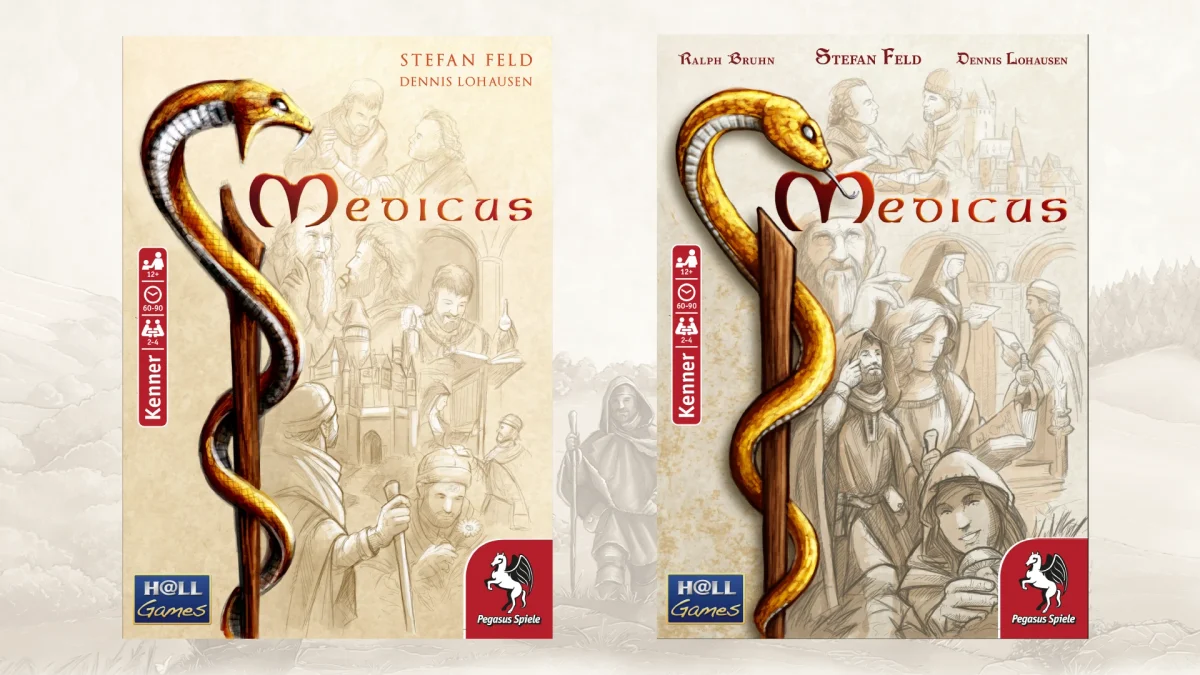
On the cover and in the game’s illustrations, the characters — contrary to what the title might suggest — aren’t always clearly male. Was making that distinction particularly important to you, Dennis?
Dennis: “Yes, absolutely. Medico‘s setting is open enough for that, and it was important to both Ralph and me that the cover show more than just characters who are perceived as male. In fact, I gave a lot of thought to which character might have which (presumed) gender, and I hope I was able to achieve a reasonably balanced result.”
Stefan, you’re almost known for developing prototypes without a specific theme at first. When did the theme come into play with Medico?
Stefan: “Yes, that’s true. For my prototypes, I hardly ever use unusual themes, but rather ones that support the mechanics. So every time, Ralph faces the challenge of turning my run-of-the-mill themes into something appealing. 😉”
Ralph: “The theme took shape in summer 2024. Until then, the prototype was called ‘Merchant Manager,’ and we moved merchants between locations, collecting goods (and, earlier on, buying them too) to sell in the towns. Then, during a game with friends, someone came up with the idea of druids gathering various ingredients for their potions in the forest. However, Stefan has already created a game involving druids … 😉 But I wanted to stick with the medical theme, and at some point the story of Barber and Medicus came to mind.”
Once the theme had finally been decided, how important was it to you to stay true to historical facts?
Ralph: “For my games, the principle is almost always the same: the theme primarily serves to make the mechanics as intuitive to play as possible. Naturally, the story we tell should be as coherent as possible, but it doesn’t claim to depict historical realities accurately. Dennis was once again a wonderful help in working out the thematic details.”
Dennis: “The game essentially tells a fictional story set within a loosely defined historical framework. So there’s no claim to represent specific facts with complete accuracy. It’s similar to a film or novel telling its own story against a historical backdrop: it should feel right on an intuitive level.”
Your last joint project, Bonfire, had a purely fantastical theme, by contrast. Which do you enjoy illustrating more, Dennis: ‘reality’ or fiction?
Dennis: “It’s true that with games like Bonfire, I can let my imagination run wild more than with themes that are at least anchored in the real world. With historical themes, I sometimes have to research details and make sure I don’t make any major mistakes. The nice side effect is that I learn things I didn’t know before or discover subjects that continue to interest me beyond the project itself. With Medico, I found it especially appealing to shed light on an aspect of medieval life that hasn’t been used very often in games.
When it comes to the actual illustration work, though, it doesn’t make much difference whether the theme is fantastical or historical. I chose this profession because I love the craft itself: what I enjoy most is simply sitting there, listening to a podcast, music, or an audiobook, and drawing or painting, regardless of the subject. If that weren’t the case, I couldn’t keep working as an illustrator in the long term.”
Sticking with the comparison between your last game and Medico: Bonfire was an expert-level game, whereas Medico is categorized as a core-level game. Was that a conscious decision?
Ralph: “No. The game has been in development for many years, so that wasn’t a deliberate decision. I’d also say Stefan and I don’t set out with a particular level of complexity in mind. We make the game in a way that appeals to both of us—and if it ends up more complex, like Bonfire or AquaSphere, that’s fine. But if it remains a little more accessible, like Medico or The Oracle of Delphi, we’re happy with that too.”
Stefan: “That’s it! And Medico has a super-simple basic structure. The depth comes from the varied cards, the many possibilities, and the interaction with the other players — in other words, choosing actions simultaneously, which requires me to read the other players. That’s why I’d put it in the core category.”
What do you actually enjoy more, Dennis: designing the iconography — the symbols used in the game — or the illustrations, such as those for the cover?
Dennis: “I enjoy all of it, and there are so many more aspects to the design: the shapes and sizes of the punchboard pieces in relation to their optimal usability and the ideal number of punchboards; the shapes and colors of the wooden components; the balance between symbols and illustrations; and, finally, the relationship between the cover artwork and the appearance of the game components.
All of that comes together differently in every game, and that’s what makes the work enjoyable time and again. But every one of those aspects also has its own pitfalls along the way, and then the fun repeatedly turns into hard work.”
And how long does it take you to illustrate an entire game like this, including developing the iconography?
Dennis: “I’m always working on several projects at once, and I don’t keep a stopwatch running. So I can’t tell you exactly how much time I invested in Medico. But as a guideline, I plan five to six months for a project of this size, from the first draft to delivering the print-ready files.”
7 different locations, 6 secondary actions and 4 main actions, plus various knowledge markers and favor cards. Do you have a winning strategy for newcomers?
Ralph: “I’ll just repeat the advice I give for every somewhat more complex game: don’t try to do everything perfectly in your first game! Try something new, even if it goes wrong —then you’ll learn something you can do differently next time. There are several strategies in this game, but discovering them should be part of the experience. 😊”
Stefan: “I’m the wrong person to ask. I lose most of my own games. 😉”
Last but not least: In Civolution, Stefan made it into the game as the director-god. Are there any Easter eggs like that here?
Dennis: “There are several references to other Hall Games titles in this game, and Stefan gets a tribute as well. 😉”
Ralph: “Dennis and I love Easter eggs, and there are a few hidden in this game too. But it would be boring to reveal them here …”
Thank you all very much!