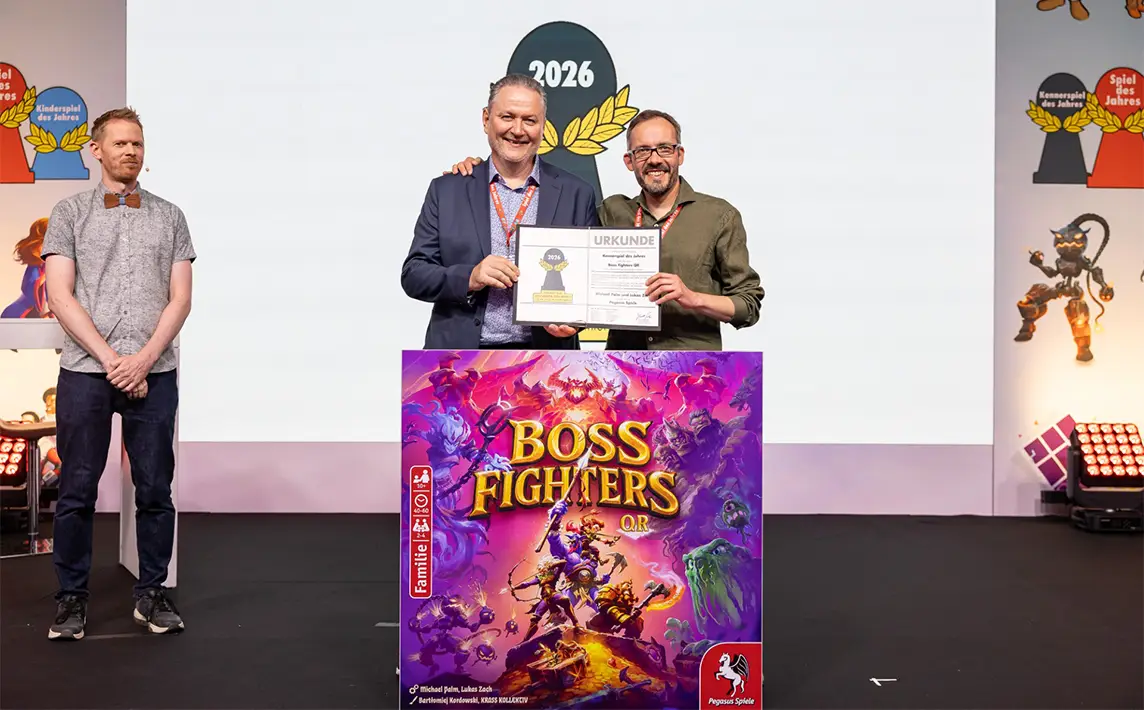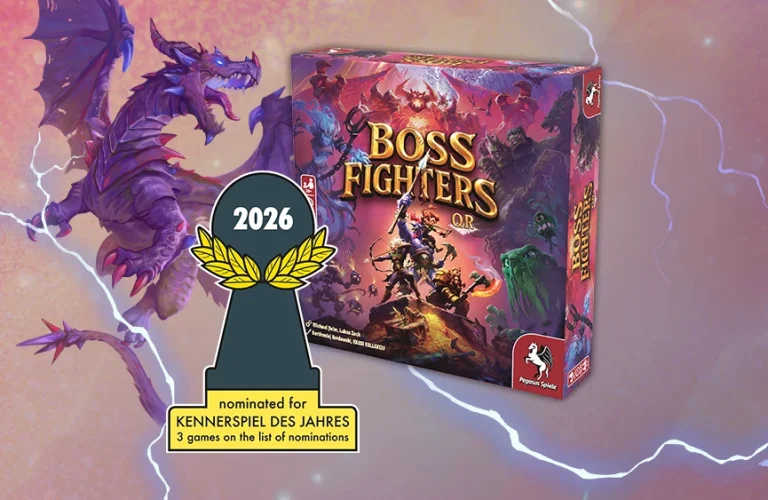


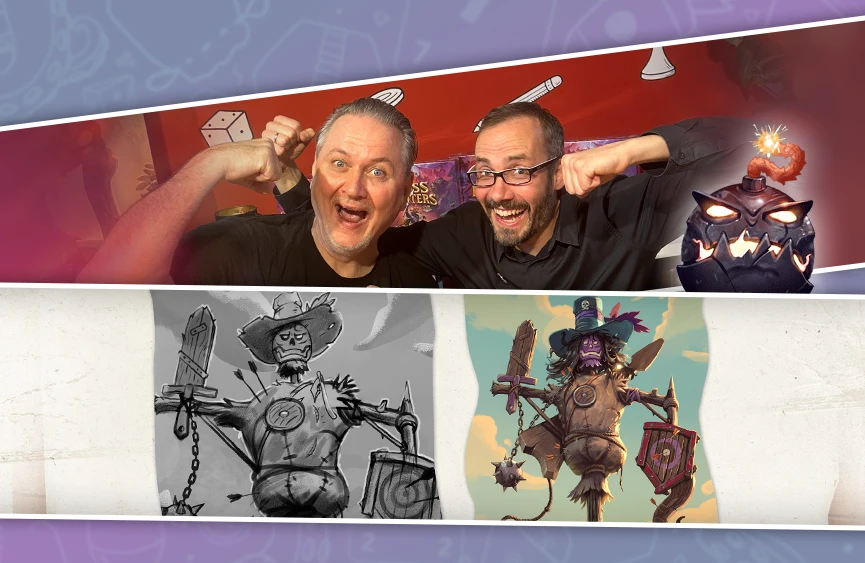
What began six years ago in a rather dubious vacation apartment ultimately, at the end of an epic journey, found its way onto the stage of the 2026 Spiel des Jahres awards ceremony in Berlin. If we had known beforehand what a mammoth project this would become, we probably never would have started. Luckily, we were naive! 😊 And luckily, by a stroke of fate, a dream team of crazy people with lots of imagination and experience came together. If the game had flopped, we probably all would have had a breakdown. It was doomed to succeed! Fortunately, everything worked out.
Sounds pretty wild, but who are we to just barge in here like this?
Sorry, we haven’t even introduced ourselves yet: We’re Lukas Zach and Michael Palm, and we’ve been designing games together for more than 20 years. That has resulted in things like BANG! The Dice Game, Aventuria, UNDO, and Dorfromantik – The Board Game, but also some oddball projects such as the Need for Speed Trading Card Game or games for the Yvio board game console. Yes, you heard that right: 18 years ago there was already a board game console for which we – along with legends such as Reiner Knizia – designed hybrid games. The console was ahead of its time, but it taught us a lot, including the fact that hybrid games are always tricky. It’s easy for an app in a game to become either meaningless distraction or so dominant that people wonder why it wasn’t simply made into a video game. And that fine line was exactly what intrigued us. We wanted to make a game with an app that would make people say: “Wow, this experience simply wouldn’t work without the app, and yet it still feels like a board game! And it’s so intuitive to use that you forget about the app while you’re playing.”
Is that (too) ambitious a goal? Yes… probably, but if you don’t aim high, you won’t achieve much, right? At least, that’s what we thought. Will we ever be able to live up to that goal? We’ll see. Let’s start from the very beginning.
Why the hell an app, of all things?
So we wanted to design a game in which an app genuinely makes sense. It should allow players to fight bosses without having to manage the boss themselves. They should be able to focus on what is fun: studying the boss’s behavior, developing a counter-strategy, and working out the best possible moves together. “How can we deal maximum damage to the boss while supporting each other as effectively as possible – setting up attacks for others, protecting them while they dish out massive damage? We want to discover combos that feel incredibly powerful, and after every battle there are new, better cards with more possibilities, and together we discuss who should take which card into the next fight.”
“It’s the first somewhat more complex game where I’d say this combination of app and analog game is practically perfect. This is how it should be.”
– Johannes Jaeger, Hunter & Friends
Scan, scan, scan – or: the biggest risk
We knew that the game’s success would stand or fall with seamless card scanning. It had to work flawlessly. That’s why it was the very first thing we asked our programmer, Florian Feith, to tackle. Programming should not begin until scanning works perfectly. If it hadn’t worked well, we would have scrapped the entire project. Thousands of cards were scanned, failed attempts were counted, and the failure rate was reduced again and again. We tried all kinds of QR codes: from tiny to huge, from classic black and white to fancy colorful versions. (Fun fact: the front-facing camera on most devices is significantly worse, which is why we went with the classic black-and-white version.)
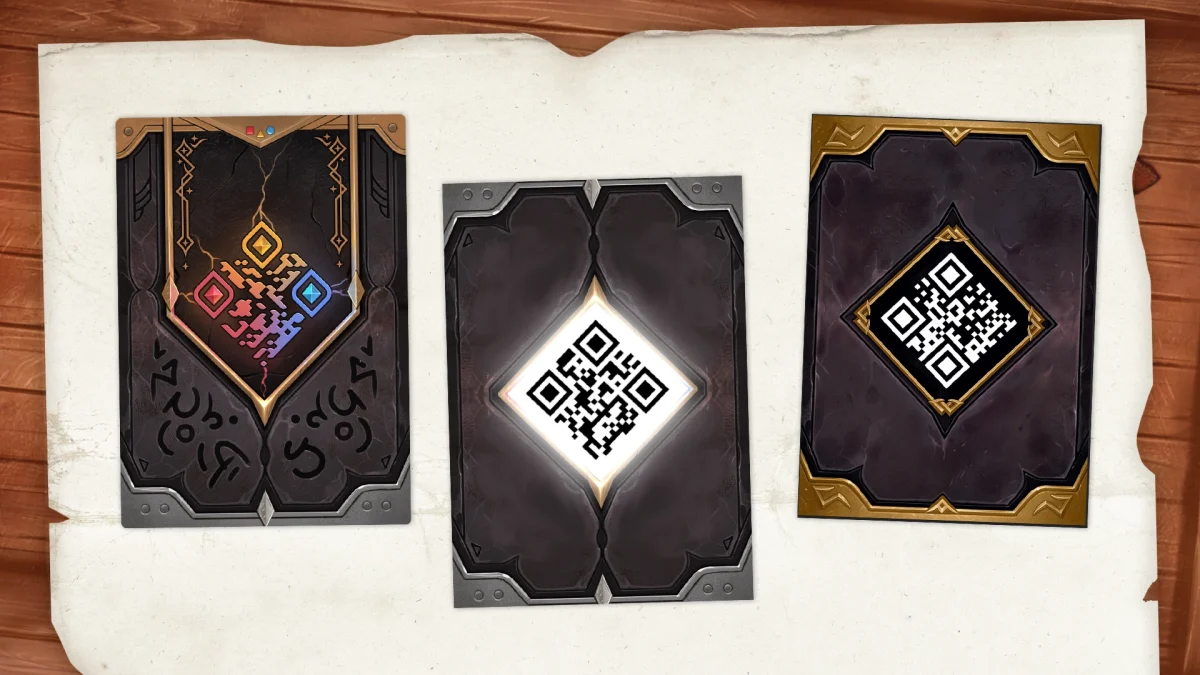
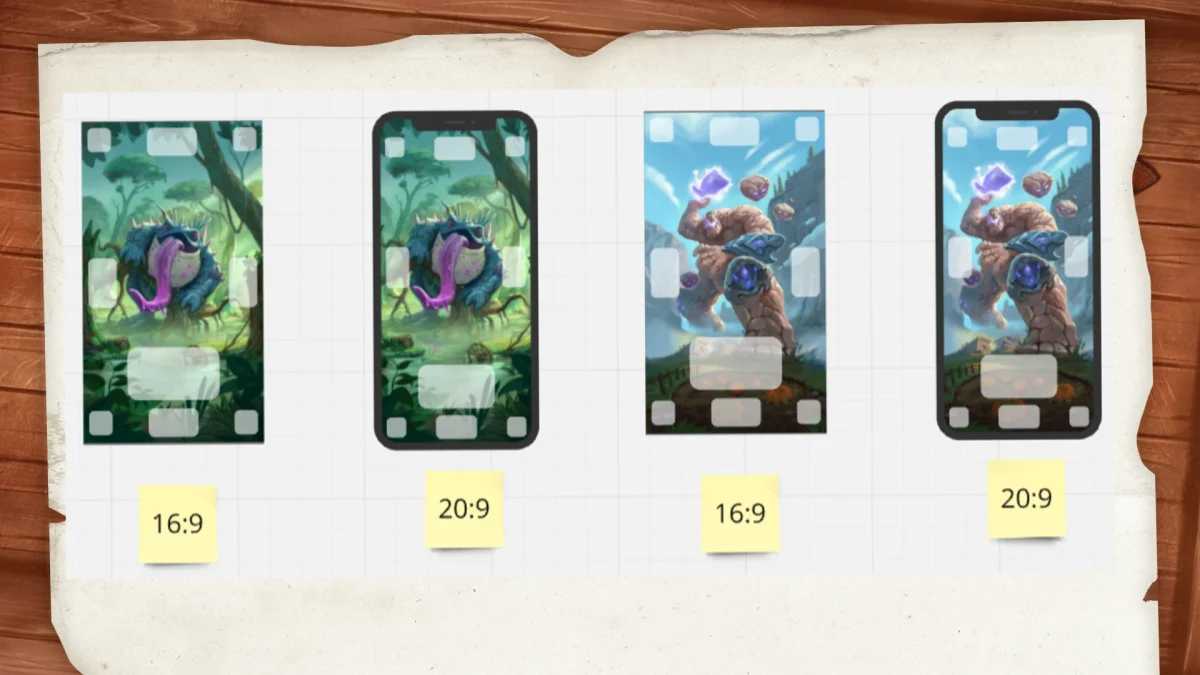
Another thing we discovered in tests with many different players was that because the device doesn’t need to be picked up, but instead lies on the table almost like a large, dynamic monster card, and because our actions aren’t entered manually into the app but through the natural motion of playing a card, many people eventually forget that it’s an app at all. It feels a little more like magic.😊
“I was incredibly skeptical, because smartphones or tablets are pretty much the last thing I want to see on a gaming table. But after a short adjustment period, nobody in my group was actually bothered by it. Especially because the device doesn’t have to be moved or passed around while playing; it simply lies on the table – just like a regular game board.”
– Heiko Klinge, GameStar
So what is the game actually about?
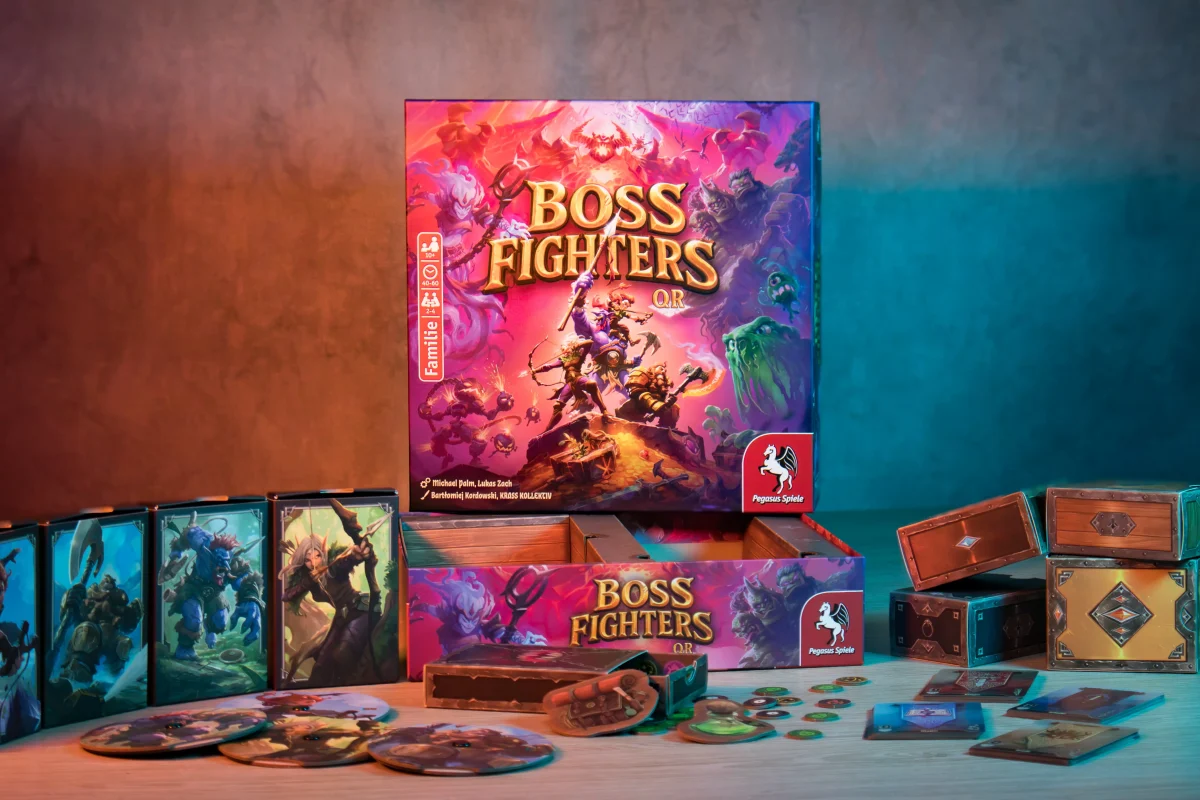
For those who doesn’t know Boss Fighters QR yet, here’s a quick interlude. First, the backstory: You’re a group of heroes brought together by chance who meet in a tavern and discover that you all share the same hobby: looting bosses. Early in your careers, you take on small, harmless bosses; later, increasingly powerful ones. The treasures from the lairs of the bosses you’ve plundered make you stronger and stronger, until one day, after many game nights, you may find yourselves knocking on the final boss’s door – assuming you haven’t already become history by then.
At the start of the campaign, everyone creates a character. To do so, you choose a hero deck (Elf, Dwarf, Troll, Halfling) and combine it however you like with a class deck (Rogue, Mage, Druid, Warrior). So anything from a Halfling Warrior to a Troll Rogue or Dwarf Druid is possible. Then it’s off to the tavern (the app’s login screen). You scan your hero and class cards, give yourselves names, and choose your seats at the table. Then you’re ready for your first boss fight.
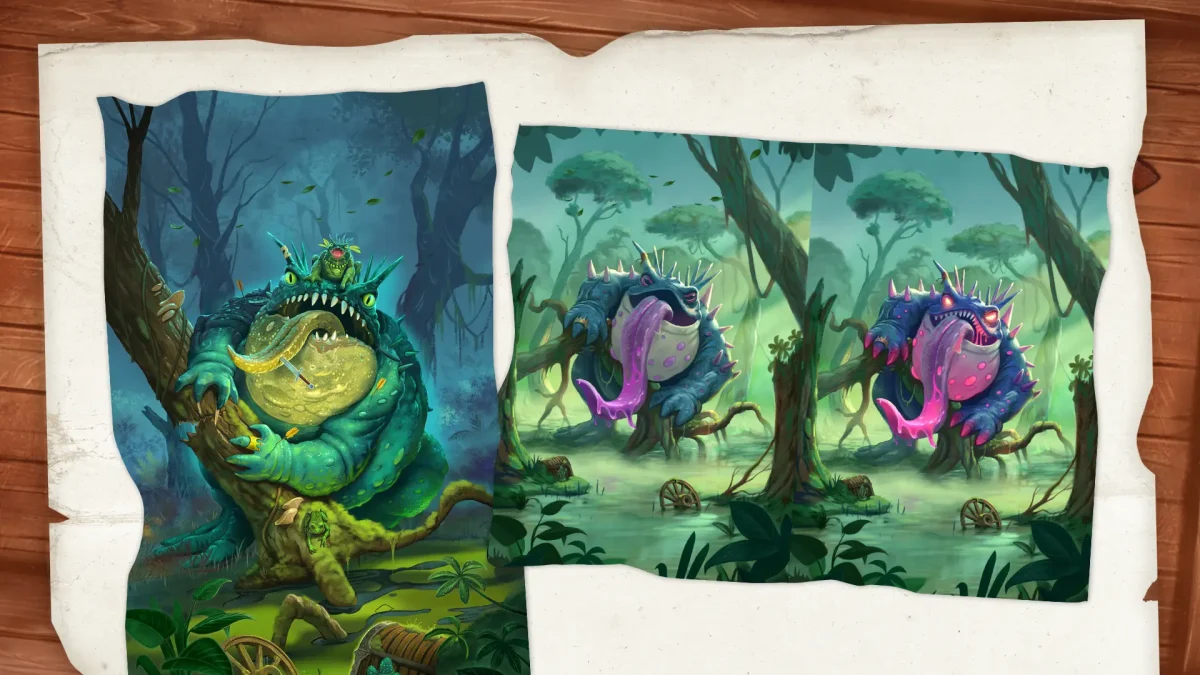
The tutorial boss teaches you how to play, and shortly afterward you face the Prince, a gigantic monster frog. You quickly realize that you need to figure out when the boss does what, how it reacts to your attacks, how to devise a strategy to get around those reactions, and how to prepare for its regularly recurring abilities. Communication is essential. You need to coordinate your actions well or you’ll lose. Even on the lowest difficulty level, mindlessly playing cards without thinking inevitably leads to an early heroic death. And if one team member dies, the battle is lost. That’s why you should use not only the cards in your hand but also the shared team items wisely: healing potions restore health, while the backpack lets you draw cards when you run out of ideas in a round.
Later, you’ll gain plenty of other useful equipment for the team, because every boss leaves behind loot! Above all, new cards for your decks. They aren’t simply stronger – although it already feels great to replace the little decorative dagger in your deck with a proper battle axe – they also introduce new tactics and combo possibilities. You choose from a pool of loot cards the boss had in its hoard. You discuss who can make the best use of which card and then decide which card you may (but don’t have to) remove from your deck in exchange.
Boss by boss, your decks become increasingly powerful, and you could never have imagined at the beginning what will eventually be possible against the final boss. The boss is bombarded with card combinations that would have killed the first boss as early as Round 1.
How it all began …
The first concept already contained many elements that are still in the final game: At the beginning of a round, the boss plans its attacks against the players and its shields are drawn for that round. Then it’s the heroes’ turn, and they each play one card in turn three times (or many more later on, because over time there are more and more cards that can give you or your companions additional actions). This lets them break the boss’s shields, damage and poison it, while also remembering to protect themselves from the boss’s attacks with protection cards. Those attacks happen after the hero phase. If an attack against a hero is NOT reduced to zero by that hero’s protection cards or those of their companions, the hero takes damage and often an additional effect such as poison – plus many other things we don’t want to spoil here. This is usually followed by a recurring round ability that has given many groups their WTF moments. Then the heroes discard cards and draw back up to their maximum, naturally after plenty of discussion about what to focus on next round: melee, ranged, or magic? Can we protect ourselves enough (because we figured there’d be more of those outrageously high attacks in the next round)?
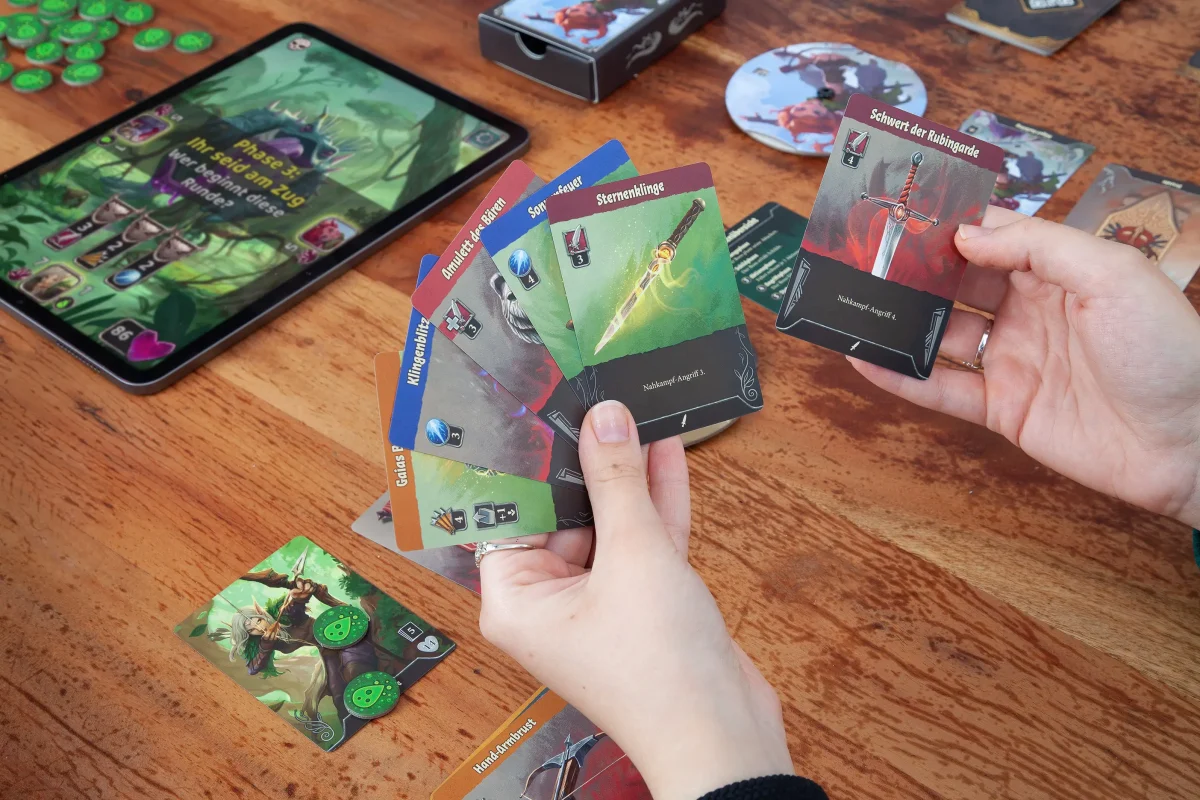
Much of this was already present in the very first concept we tried in that aforementioned vacation apartment, and it already hinted that the game could become something good. At that point, however, it was still all paper and no app – and it would stay that way for quite a while.
Paper bosses
While our programmer Florian diligently optimized the scanning to clear the first hurdle, we tinkered with the first real boss and the first proper heroes and classes. We’re role-players through and through, so in fantasy games we always start with the two most stereotypical characters of our youth: Michael plays a Dwarf Warrior and Lukas a Wood Elf Archer. Naturally, there’s plenty of role-playing in the finest Legolas-and-Gimli tradition. And of course, each of us constantly accuses the other of having an overpowered deck. The first boss was the Prince – or rather, his cursed form as a monster frog several meters tall. During those fights, of course, we both knew exactly what the boss would do. The deduction element that makes the game so exciting today didn’t exist yet; at first, the goal was simply to design a core combat mechanism that would make everything we had envisioned at the time possible.
When do we finally bring the publisher on board?
Not too early! We knew the project would need a budget far beyond that of a normal board game. First, we needed a programmer who would continue maintaining and developing the app later on, because even then we planned to keep expanding the game with new bosses, heroes, and game modes. Then we needed top-quality illustrations. We expected the game to face skepticism about the app (because of the many negative examples from previous years). So everything had to be perfect: the app, the components, the graphics. On top of that came animation and sound in the app. All very expensive. Not exactly a great starting point for pitching a publisher: “Yes, we know board games with apps aren’t universally popular, but we’re making a really good game and unfortunately it’s going to be very expensive …” High risk, high investment … difficult.
Nevertheless, we tried – and managed to land it. At first, we only described our vision and offered to eliminate the risks as quickly as possible, with more money being invested only after that. So the project could have been canceled at any time. Winning Spiel des Jahres in 2023 with Dorfromantik – The Board Game was certainly a pivotal moment. Suddenly, confidence in us had naturally grown – and there was also more funding available. We’re very grateful to Andreas and Karsten for trusting us, and to the entire Pegasus Spiele team, which wasn’t convinced from the start but gradually became more and more convinced and contributed to the success with ever-greater passion.
That was also when Sebastian Hein joined us as the editor we’d hoped for. Alongside Florian, he was the second perfect fit, because he had extensive experience with boss battles of all kinds, as well as balancing and scripting. While programming the bosses in the app became increasingly difficult for us, he handled it with ease. Florian and Sebastian quickly became a dream team. Sebastian wanted to take every one of our bosses to a whole new level. He wanted every boss to feel genuinely different and had lots of ideas that he discussed directly with Florian and put into practice. We increasingly became a special-ops unit.
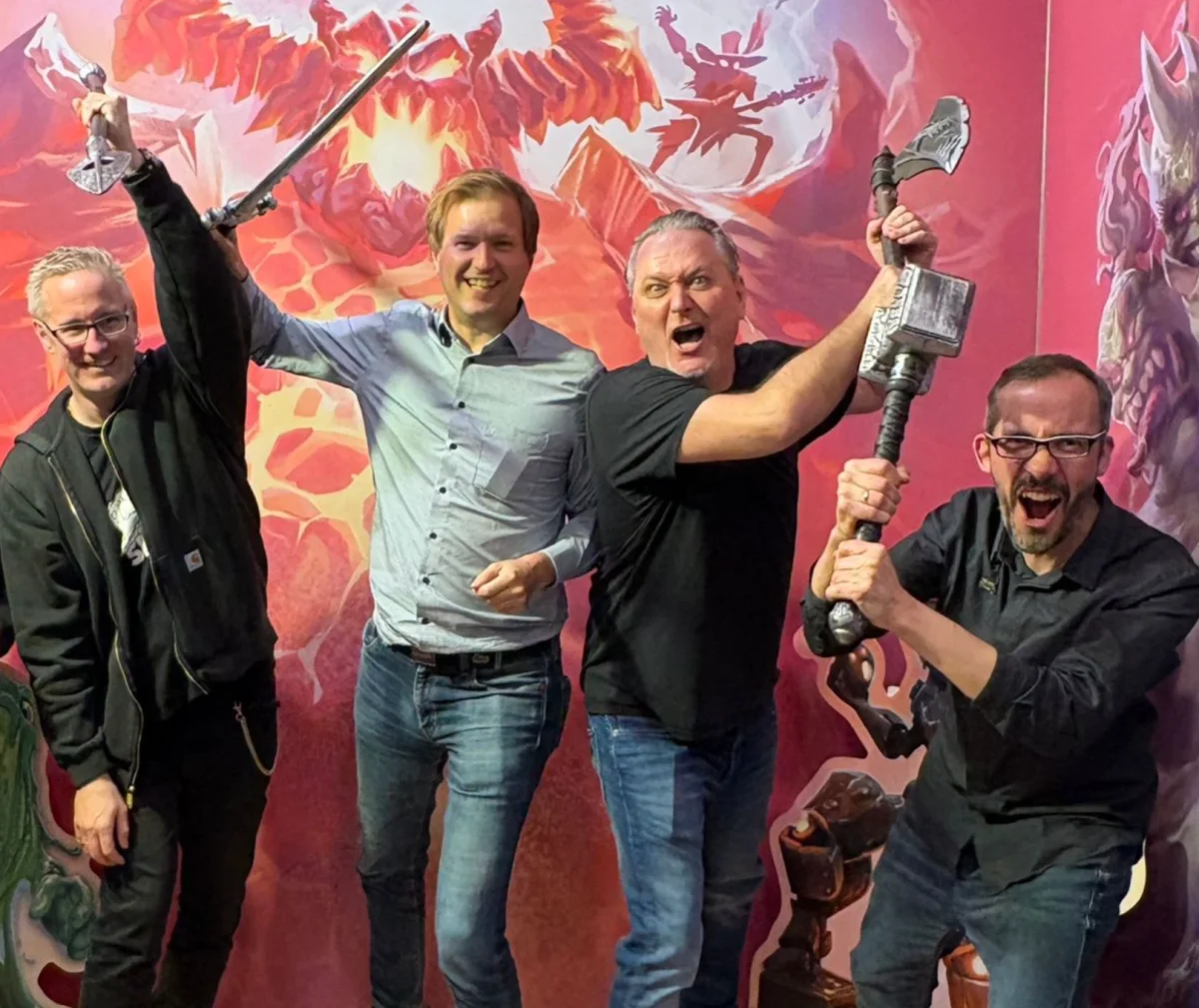
The game then slowly but steadily became a favorite at the publisher. Almost everyone on the editorial team and even beyond was involved in some way. Usually because they had played it enthusiastically and then contributed countless ideas. The fever quickly spread to other teams as well: the IT team that had to bring the app out into the world, marketing, sales, logistics, and the event teams at conventions. It quickly began to feel like something really big.
What changed during the six years of development? Were there any complete 180-degree turns?
The biggest change – or rather, the biggest leap forward – was the transition from paper to the app. Up through boss 4, the bosses existed only on paper. The more complex they became, the more our brains melted while running the games. We had tables, cards, tokens, and dice in front of us to simulate the bosses’ behavior. Eventually it became so exhausting that we were completely wiped out after a battle. And it became increasingly difficult for the players too because of our long response times: “Wait, hold on – how much magic damage did you just deal? Um, where’s the tally sheet? Ah, here. Okay, now you get a poison token and the boss gets new shields. Oh no, had those already been removed from the pool? Phew …” It was time for the app. But that took a while. While, on paper, we already had an entire game with 3 different bosses, programming still had to begin and probably didn’t catch up with us until two years later, when we were already conceptualizing the final bosses. It took quite a while to reach the first playable version with one boss. Until then, our brains still had to keep running marathons.
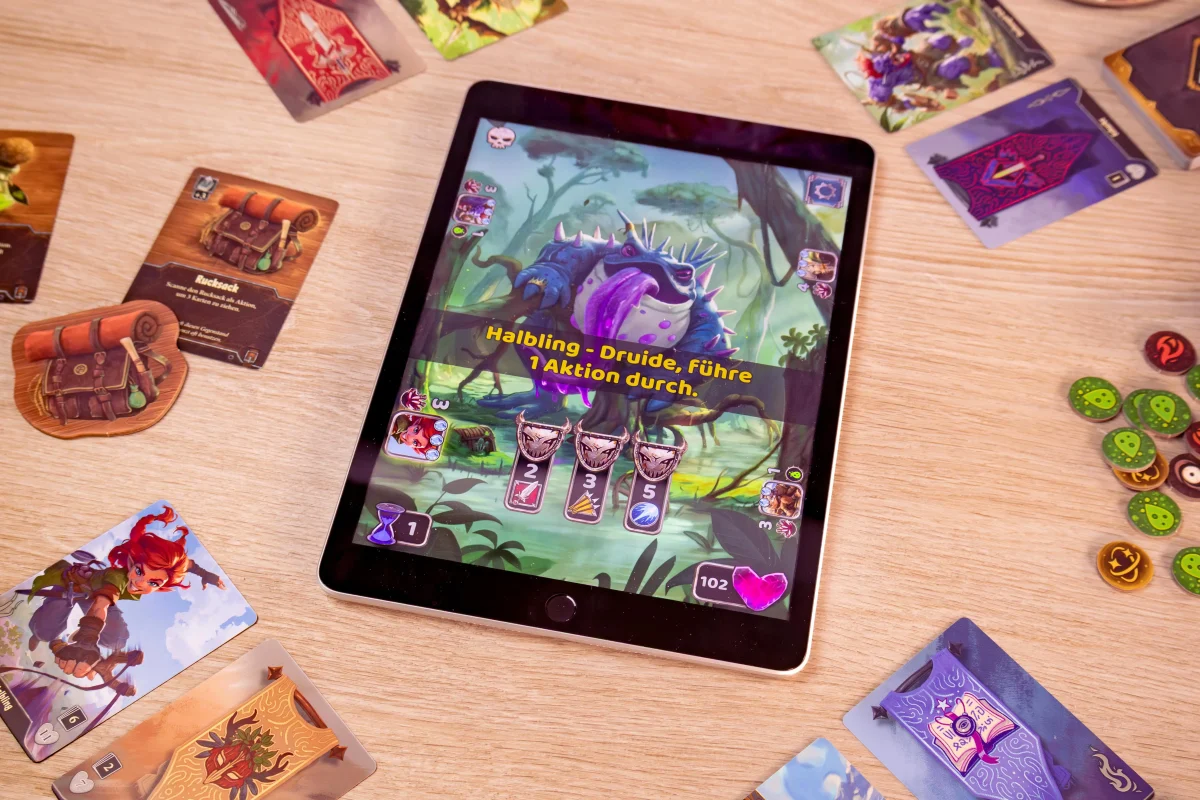
Another change was the deduction element for the bosses. When Sebastian joined the team, the bosses became significantly more demanding. He wanted every boss to be different and each one to feel like a puzzle you had to decipher. That increased the workload for every boss yet again, but it became one of the game’s most popular elements, so it was absolutely the right decision. Unfortunately, it also means we can’t simply pull ten new bosses out of our sleeves every year – especially if they’re all supposed to be new and different …
“Boss Fighters QR now transforms from a pure combat game into a blossoming deduction game.”
– Christian, Brett und Pad
Adjustable difficulty, on the other hand, had been planned from the start, but we never expected it to broaden the target audience so dramatically. Initially, we developed at core game level, but over the course of development we realized that difficulty settings could let us reach family game fans at the lower end and experienced gamers at the upper end. Simply adjusting the boss’s damage and health isn’t enough, though. True experts want greater complexity and new mechanisms, while for families we even switch off some of a boss’s basic mechanisms if we find they are overwhelming. Incidentally, it was also important to us that the boss illustrations remain family-friendly. In earlier drafts, some bosses looked noticeably nastier.
“The app only comes into play where it genuinely makes sense. For example, you can choose between four difficulty levels for every boss – from literally child’s play to ‘even makes my nerd group sweat.’ On higher difficulty levels, the bosses even gain additional abilities.”
– Heiko Klinge, GameStar
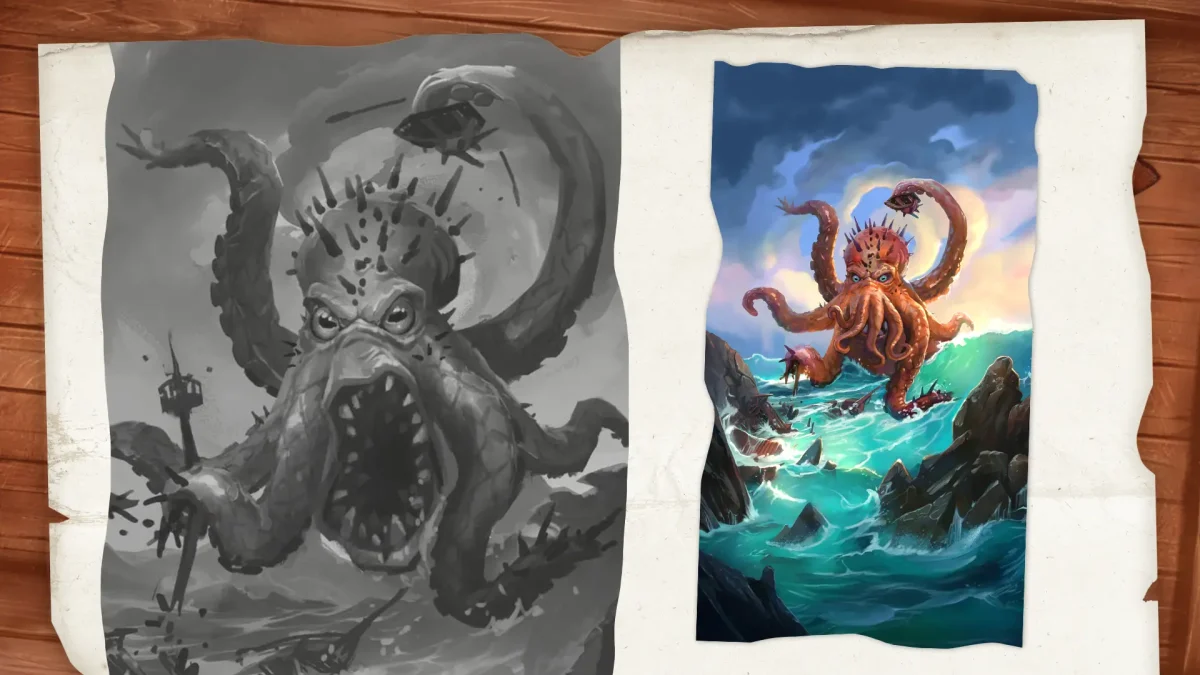
At first, our combat system only had the three attack types melee, ranged, and magic, which had already worked well for us in Aventuria. But we were still missing a reason why players should cooperate when attacking. So we introduced supports. They’re usually somewhat stronger than attacks, but can only be played if someone has already played a corresponding attack that round. This created many more opportunities – and a much greater need – for coordination.
“In what I consider the most important boss-battler discipline, Boss Fighters genuinely fights on equal footing with my genre favorites Oathsworn and Primal. Above all because it uses lots of clever mechanisms that don’t just encourage cooperation, but demand it.”
– Heiko Klinge, GameStar
Minor changes also were made so that, at the beginning, the heroes’ damage was first accumulated and then applied to the boss at the end of the round. Sebastian introduced immediate damage, which feels much more dynamic. In the past, healing potions could even be used when a hero unexpectedly died, but that created timing problems, among other things. Now, if a hero dies, you lose immediately – so you have to keep a close eye on your health and make sure you don’t drink that healing potion too late.
Last but not least, there was another very strange rule for hero death: The hero was merely unconscious and, whenever their turn came around, could roll a ten-sided die to see whether they woke up. Sounds a little ridiculous? Yes, it was. Sebastian always found it very amusing before the rule was scrapped.
Going more analog: the brain switch-off
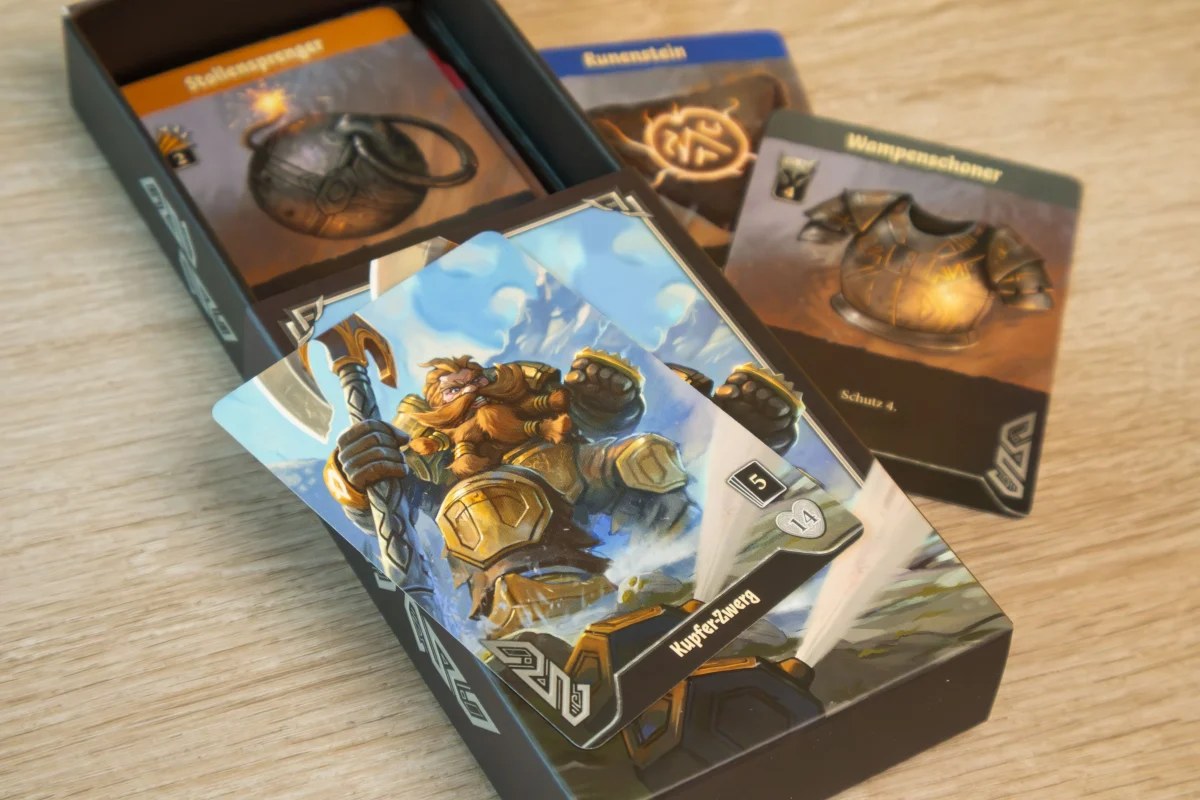
One question we’re often asked is: Why doesn’t the app also track the heroes’ health and status tokens? There are several reasons, but one very important suddenly became clear to us during development. If the app takes over too much, people’s brains switch off. What? Yes, really. We found that when the app handles too much, players stop thinking along with the game. They rely on the app, and then all the fun is gone. If we no longer understand what’s happening and are just boredly scanning cards, all the communication suddenly vanishes. But it’s important to know what my teammates are planning so I can support them optimally – or point out that their action ruins my plan and, for example, means I deal less damage. All that great co-op discussion disappears. That’s why we moved some things back out of the app and onto the table. And it looks nicer too, and makes the game feel like a board game.
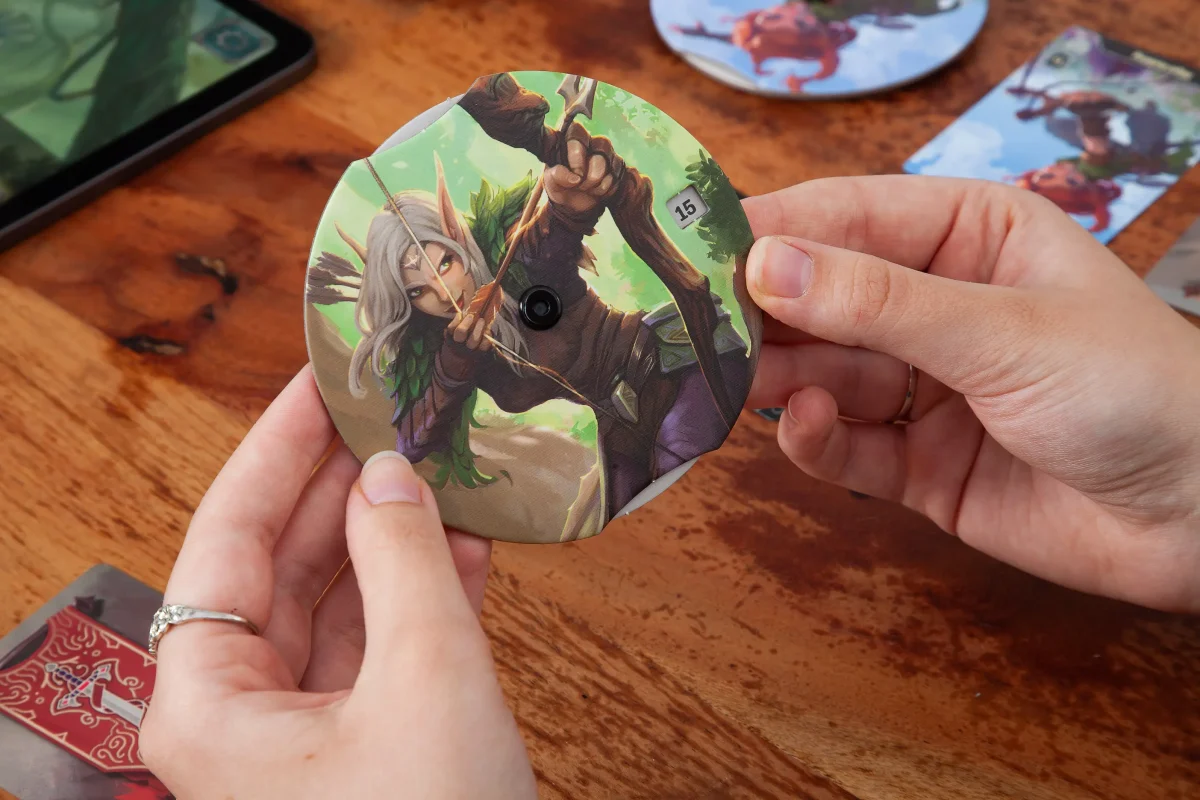
“The designers of Boss Fighters QR have clearly put a lot of thought into where an app helps and where it doesn’t. For example, you manage your own health on a cardboard dial, which makes taking damage feel all the more painful. And because you spend most of your playtime handling your cards, Boss Fighters QR always feels appropriately physical.”
– Heiko Klinge, GameStar
Now, let’s talk about the big elephant in the room
No. Of course it isn’t a WoW game, but back then we asked ourselves how we could use the theme to reach the broadest possible audience – from family game fans to experienced gamers. Blizzard showed how it could be done with its world: a mixture of fantasy and Disney, we’d say. It has everything: humor, aesthetics, classic fantasy. That’s what we wanted too. Naturally, that meant relying on archetypes – heroes and classes everyone knows. And yes, we can hardly deny that it’s an homage to WoW. After all, we were all enthusiastic WoW players. And even though a small number of people accuse the game of being generic and light on storytelling, it appeals to an enormous number of people on the other hand – whether through the visual style or feelings of nostalgia. Like Hunter, for example:😂
“Boss Fighters QR is by far the best board game adaptation of World of Warcraft.” 😉
– Johannes Jaeger, Hunter & Friends
Developing the art style was another mammoth task, and more people joined along the way to expand our dream team: Bartłomiej Kordowski and KRASS KOLLEKTIV. All incredibly creative people who put an unbelievable amount of effort into the project and gave our ideas and the world a face.
Where could the project have failed?
Oh, in several places! We’ve already mentioned card scanning and the budget, but the illustrations were another one. We wanted them to be top-notch, and every card was supposed to have an illustration. So we had to find illustrators who not only had a brilliant style but could also work quickly enough to keep the budget from exploding. Of course, we didn’t want AI-generated artwork, so everyone had to be very creative with their time and find new methods. You really got the absolute maximum out of it, folks!
The core mechanism could have failed too. For a long time, we weren’t sure whether it had enough substance to carry an epic campaign in which the players’ decks become increasingly outrageous. We knew this challenge from trading card games. There, too, the basic system needs enough depth to support entire future sets.
And when we postponed the game twice by a year, we became increasingly afraid that some other, much larger publisher might also be developing a game like this with an app – and what if they released theirs first …😅
Were we nervous about the release?
Absolutely! Very much so. We knew everyone had given their best for years and the game was very well received in the test groups, but would players accept an app in their board game? We had gone all-in, and so had the publisher: It commissioned the largest initial print run of any game ever for the company. That didn’t exactly make us more relaxed. What if the game failed? In fall 2025, the hall at Pegasus Spiele was packed. It was shortly before the game’s release in Essen. Retailers, press, the convention team – everyone had arrived, and nobody had a clue. Nobody knew about the game. Maybe it had been kept secret so we could quietly finish it and postpone it by two years without anyone noticing; or maybe so that the competition wouldn’t find out about it. Either way, it was a real surprise, and everyone there was enthusiastic (and we were extremely relieved). At the fair in Essen, it was one of the most hotly discussed games. And that record initial print run? The warehouses were empty within three weeks. Phew! Lucky us.😊
Why an app can take things to a new level
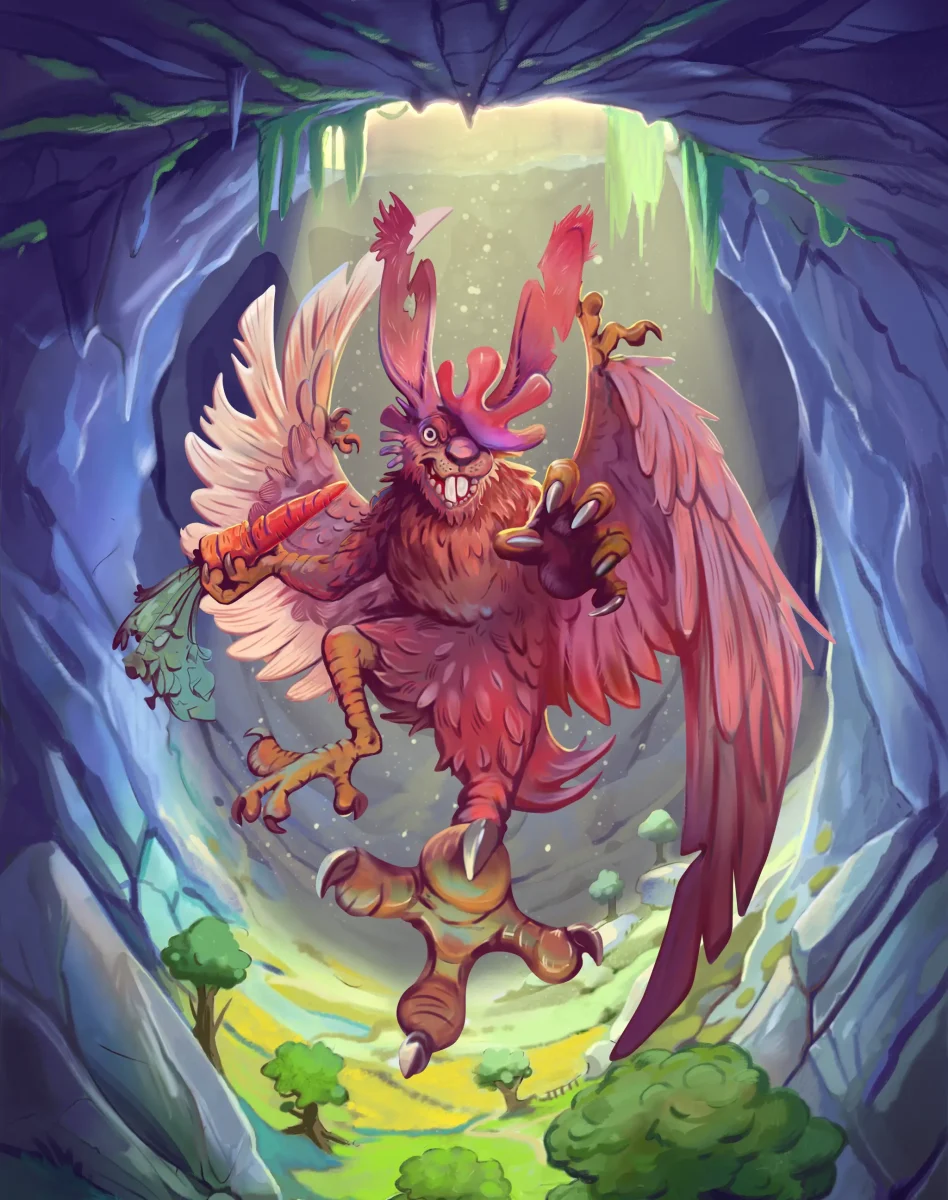
What makes an app unique in a board game is that it can be adjusted at any time. Have you ever had a board game on your shelf where errors later vanished as if by magic? Or you open the box after a year and suddenly the boss monsters are available again at an elite level for experienced players? Or suddenly, at Christmas, you hear a little bell and a Christmas boss appears? These are all things we’ve already done, and they’ve been enthusiastically received. Of course, that also creates expectations. Will there be a Halloween boss now? We can’t promise anything! What people are really asking for, of course, are expansions. And they’re quite challenging.
“It’s almost a miracle how Boss Fighters QR condenses the fascination of boss battlers into a beginner-friendly family game. And it succeeds because the designers focus entirely on the two big Cs: combos and co-op. Everything else is either handled by the app or was thrown overboard.”
– Heiko Klinge, GameStar
A look into the crystal ball
Calls for new heroes and bosses began practically on day one. Surprisingly, more players wanted new heroes even more than they wanted new bosses. The nice thing was that we could prick up our ears and listen to which new heroes and classes people wanted. Two of your wishes have been granted: The new Jungle Fever expansion, releasing for the game fair in Essen in 2026, includes a Paladin and a Shaman – two of the most-requested classes. There were no such clear preferences for heroes, so we let ourselves drift a little and came up with new hero mechanisms. The Goblin Tinkerer brings crazy and dangerous inventions and can later even assemble a combat robot. The Dryad – a plant creature – can transform into different forms. Both heroes are more demanding to play than those in the base game, but they’re also aimed at players who already know Boss Fighters QR. There will also be 5 brand-new and unique bosses that call the jungle home. Stay tuned!
New game modes are also on our list. Several are currently being tested in parallel. We’ve already released one: Elite Boss mode. The first five bosses from the base game have been powered up enough to stand their ground even against the completely overpowered decks of heroes who have already completed the game. Of course, you can also start over with new hero/class combinations or at a higher difficulty level, but it’s also great fun to take your insane level-10 decks into battle against the elite bosses.
Closing words
We hope you get the chance to try Boss Fighters QR. Ideally, play at least through boss 4, because – here’s one little spoiler – that’s when the heroes level up and a new meta layer is introduced, adding another interesting level of complexity. Later on, the bosses become increasingly intricate for experienced gamers. We intentionally kept the first three bosses simpler so that it’s easy to get into the game. We’d be delighted if you gave the game a chance even though it uses an app. We did everything we could to make it a special experience.
Greetings from the tavern,
Lukas and Michael
End credits
P.S.: And what was the story with that dubious vacation apartment, you may be wondering? And the Spiel des Jahres awards ceremony? Well, six years ago we rented the apartment so we could spend five intensive days working on the Boss Fighters concept, since we normally live 700 kilometers apart. But someone else lived upstairs, and he certainly knew how to numb our senses: the pungent smell of frying onions mixed with cigarette smoke, accompanied by sounds from his television that weren’t intended for minors. Well, it was still the beginning of a wonderful journey that eventually took us onto the stage in Berlin. It was a fantastic experience to attend the awards ceremony for the second time, even though unfortunately we didn’t get to take home the Kennerspiel des Jahres award for Boss Fighters QR in the end. We’re simply grateful for all the wonderful, countless people who have been and continue to be part of this project.🤗